Understanding why properties go to auction—and the differences between foreclosure and other real estate auctions—can help both buyers and sellers better understand the auction process.
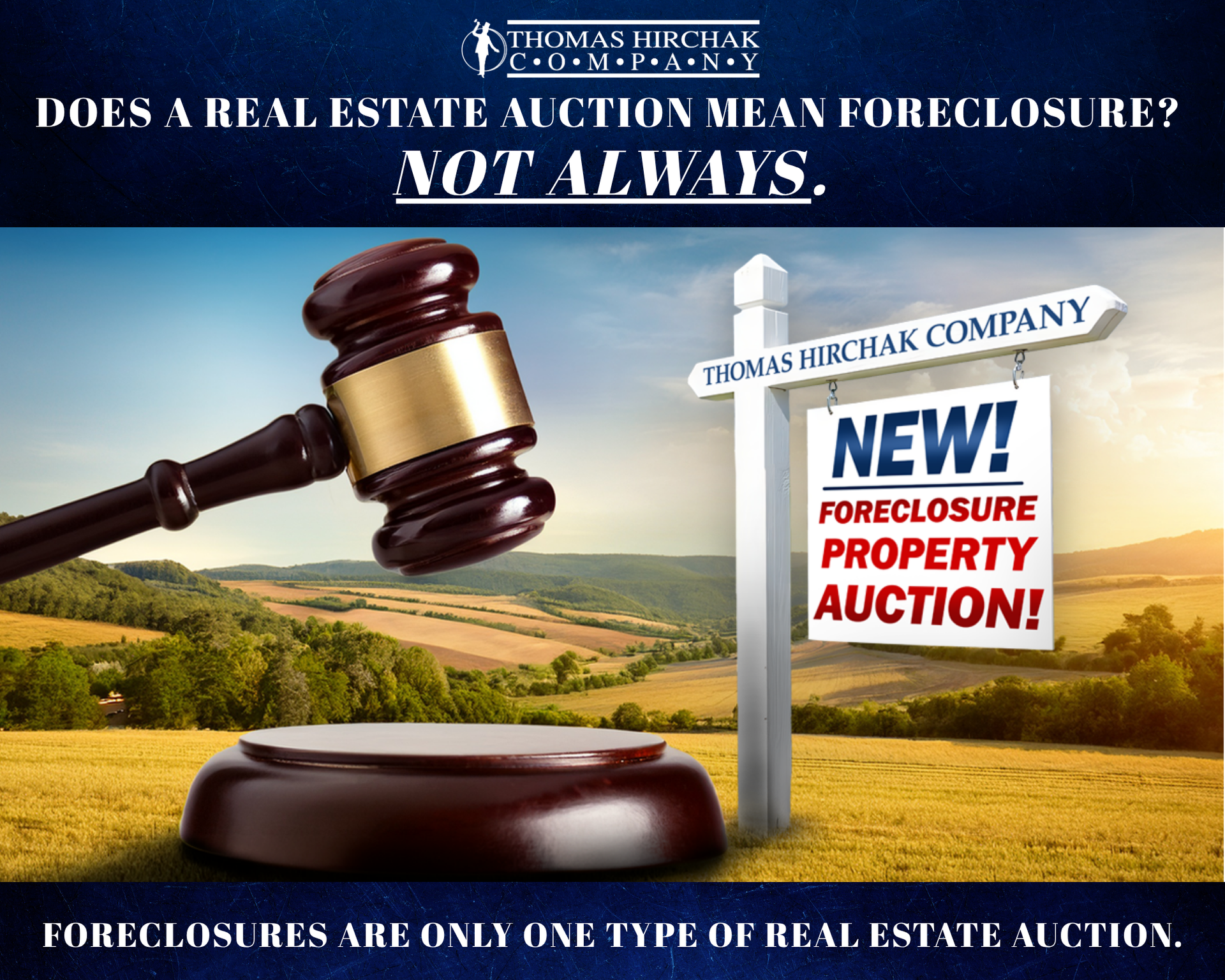
Does a Real Estate Auction
Mean Foreclosure? Not Always.
When people hear the words “real estate auction,” one of the first things that may come to mind is foreclosure.
But does a real estate auction automatically mean a property is in foreclosure?
No.
Foreclosures are only one type of real estate auction. Properties can come to auction for many different reasons, including estate settlements, relocation, downsizing, business decisions, bankruptcy proceedings, investment strategies, or simply because a property owner chooses auction as their preferred method of sale.
At The Thomas Hirchak Company, we conduct live real estate auctions throughout Vermont and New England for a wide variety of residential, commercial, agricultural, land, and specialty properties.
Understanding why properties go to auction—and the differences between foreclosure and other real estate auctions—can help both buyers and sellers better understand the auction process.
👉
Browse Current Real Estate Auctions:
https://www.thcauction.com/real-estate
What Is a Foreclosure Auction?
A foreclosure generally occurs when a property owner has defaulted on a mortgage or other secured obligation and the lender uses the legal foreclosure process to recover the property or the debt secured by it.
Depending on the circumstances and applicable laws, the property may ultimately be offered through a public auction.
Foreclosure auctions typically have specific terms governing registration, deposits, bidding, payment, and closing. Buyers should carefully review the terms for the individual property and complete their own due diligence before participating.
The important distinction is this:
Foreclosure describes the circumstances that led to the sale. Auction describes the method used to sell the property.
Those are not the same thing.
Does a Real Estate Auction Mean
the Property Is in Foreclosure?
No. A property being sold at auction does not automatically mean it is a foreclosure or distressed property.
Auction is simply another method of selling real estate.
A homeowner may voluntarily choose a live auction because they want a defined sale date. An estate may use an auction to sell inherited property. A business owner may sell commercial real estate as part of a relocation or retirement. An investor may use an auction to generate competition among prospective buyers.
Other properties may be sold as part of a foreclosure, bankruptcy, court-ordered, or other legal proceedings.
The reason behind each auction can be different, which is why buyers should review the individual property listing rather than making assumptions based solely on the word “auction.”
Why Do Properties Go to Auction?
There are many reasons a property owner or other authorized seller may choose the auction method.
Private Property Sales
Property owners don't need to be experiencing financial distress to choose an auction.
Some sellers prefer a live auction because it creates a structured selling process with a defined auction date and competitive bidding among interested buyers.
Estate Real Estate
When an estate includes real property, an auction can provide a structured way to market and sell the property.
This may include family homes, land, farms, vacation properties, investment properties, or other real estate held by an estate.
Commercial & Investment Properties
Commercial buildings, restaurants, offices, industrial properties, rental properties, and development opportunities may also be offered at auction.
Auction marketing can help expose these properties to entrepreneurs, investors, developers, and other commercial buyers.
Farms, Acreage & Land
Not every real estate auction includes a house.
The Thomas Hirchak Company also handles auctions involving farmland, building lots, recreational acreage, large tracts of land, and other undeveloped properties.
Bankruptcy & Court-Ordered Sales
Some properties are offered as part of bankruptcy or another court-supervised proceeding.
Like foreclosure, however, this represents only one reason a property might come to auction.
What Types of Real Estate Can Be Sold at Auction?
Real estate auctions aren't limited to one particular type of property.
Depending on the seller and circumstances, properties offered through auction can include:
- Single-family homes
- Condominiums
- Multi-family properties
- Vacation homes
- Farms
- Agricultural land
- Building lots
- Recreational acreage
- Commercial buildings
- Restaurants
- Office properties
- Industrial properties
- Investment properties
- Waterfront and lakefront properties
- Historic properties
- Development opportunities
- Large estates and specialty properties
That variety is one of the reasons it's worth regularly checking upcoming real estate auctions. The next property offered could look completely different from the one before it.
👉
Explore Current Real Estate Opportunities:
https://www.thcauction.com/real-estate
Why Would Someone Voluntarily Sell
Real Estate at Auction?
This is perhaps the biggest misconception surrounding real estate auctions.
Sellers don't have to be forced into an auction.
Auction can be a deliberate real estate selling strategy.
One of its primary advantages is a defined timeline. Instead of listing a property without knowing exactly when it will sell, the auction establishes a specific date when interested buyers come together to bid.
Other potential benefits include:
- Competitive bidding among buyers
- Concentrated marketing leading up to the auction
- A defined sale date
- A structured selling process
- Increased urgency among interested buyers
- Transparent competition
For certain properties and seller circumstances, these characteristics can make auctions an attractive alternative to a traditional real estate listing.
If you're considering selling your own property through auction, learn more about the process:
👉
Sell Real Estate with The Thomas Hirchak Company:
https://www.thcauction.com/real-estate-auctions
Foreclosure, Bankruptcy & Traditional
Real Estate Auctions Are Different
It's also important not to use terms such as foreclosure auction, bankruptcy auction, and real estate auction interchangeably.
A foreclosure sale is connected to a foreclosure proceeding.
A bankruptcy sale involves property being sold through a bankruptcy process and may be subject to court oversight or approval.
A privately commissioned real estate auction may simply involve an owner choosing auction as their preferred selling method.
The bidding process may look similar from the outside, but the circumstances, terms, deposit requirements, legal procedures, and closing process can vary.
Always read the terms for the specific property you're considering.
For additional questions about buying and selling through The THCo.:
👉 https://www.thcauction.com/faqs
How Can Buyers Tell What Type
of Real Estate Auction It Is?
Start with the individual property listing.
The auction page provides important information about the property, auction date, registration, inspection or open house opportunities, terms, and other sale-specific details.
Buyers should also:
- Review all available property documents
- Attend the scheduled open house when available
- Read the auction terms before bidding
- Understand deposit and closing requirements
- Research the property independently
- Ask questions before auction day
Most importantly, don't assume a property is distressed simply because it's being sold at auction.
Auction tells you how the property is being sold—not necessarily why.
Thinking About Selling Your Property at Auction?
You don't need to be facing foreclosure, bankruptcy, or another distressed situation to contact The Thomas Hirchak Company about selling real estate.
Property owners may choose an auction for residential homes, land, farms, commercial properties, investment real estate, and other assets.
Our team helps guide sellers through the process, including property evaluation, auction preparation, marketing, bidder outreach, auction day, and the steps leading toward closing.
👉
Learn About Selling Real Estate at Auction:
https://www.thcauction.com/real-estate-auctions
👉
Explore All Selling Options with THCo.:
https://www.thcauction.com/sell-with-thomas-hirchak
Final Thoughts
So, does a real estate auction mean foreclosure?
Not at all.
Foreclosure properties are one part of the real estate auction market, but they're far from the whole picture.
Homes, farms, land, commercial buildings, investment properties, estates, and specialty properties can all be sold through auction for many different reasons.
For buyers, that means an auction sign shouldn't automatically be interpreted as a sign of distress. It may simply represent another opportunity to purchase real estate through a competitive, transparent process.
And for sellers, auction isn't limited to foreclosure or court-ordered situations. It can be a strategic way to market a property, establish a defined sale date, and bring interested buyers together.
👉
See What's Currently Available:
https://www.thcauction.com/real-estate
🔔 Stay Connected with The Thomas Hirchak Company
📲 Follow Us for Auction Updates
We regularly share upcoming real estate auctions, open houses, new listings, auction reminders, and other opportunities throughout Vermont and New England.
Facebook:
https://www.facebook.com/THCAuction
Instagram:
https://www.instagram.com/thomashirchakcoauctions/
YouTube:
https://www.youtube.com/channel/UCb9hVKyHcdvlavyhMUkAPCQ
TikTok:
https://www.tiktok.com/@thomashirchakcompany
💼 Looking to Sell?
👉 https://www.thcauction.com/sell-with-thomas-hirchak
🏷 Browse Upcoming Auctions
👉 https://www.thcauction.com/auctions
📞 Have Questions?
802-888-4662
info@thcauction.com
✍️ About the Author
The Thomas Hirchak Company is a Vermont-based auction and real estate firm serving buyers and sellers throughout New England. Since 1979, THCo. has conducted live real estate auctions along with online commercial, equipment, estate, and specialty auctions and simulcast public auto auctions.
Our real estate team works with a wide variety of properties and seller situations, helping connect real estate opportunities with interested buyers through professional auction marketing.
Learn more:
FAQs
Does a real estate auction mean foreclosure?
No. Foreclosure is only one reason real estate may be offered at auction. Property owners, estates, businesses, investors, and other sellers may also voluntarily choose the auction method.
Why would a homeowner choose to sell at auction?
A seller may choose an auction for its defined timeline, competitive bidding process, concentrated marketing, and ability to bring interested buyers together on a specific sale date.
Are bankruptcy auctions and foreclosure auctions the same?
No. Bankruptcy and foreclosure are different legal processes. Buyers should review the terms and circumstances of each individual property before bidding.
What types of real estate can be sold at auction?
Homes, condominiums, farms, land, commercial buildings, investment properties, waterfront properties, development opportunities, and many other types of real estate can be sold at auction.
Can a regular homeowner sell their property at auction?
Yes. Property owners can voluntarily choose an auction as their preferred method of selling real estate.
Where can I find upcoming Vermont real estate auctions?
View current Thomas Hirchak Company real estate listings here:
https://www.thcauction.com/real-estate
Other Upcoming Auctions